
Should I Wait For Rates To Drop Before Buying A Home?
A 2025 special report by Coatlity asked potential homebuyers what rate would shift them from window shopping homes to purchasing one. Gen Z’s magic number was 4.9%. And the other groups queried actually had lower thresholds. The median response from would-be American buyers was 4.6% with Boomers holding out for 3.9%.
Why is waiting for sub-5% mortgage rates a bad move? It’s the amount of time you’d have to wait to see those rates return. From May 2010 to April 2022, the weekly average 30-year conventional mortgage rate sat at or below 5.05%. That’s twelve years of mostly sub 5% mortgage rates. It’s understandable that this sustained period of lower rates has left would-be buyers waiting for a repeat before they purchase a home. 5% isn’t some fallacy. It’s attainable. We’ve seen it. It’s important to step back and look at the broader picture to get a full understanding of where rates have been, where they are now, and where they will likely go.
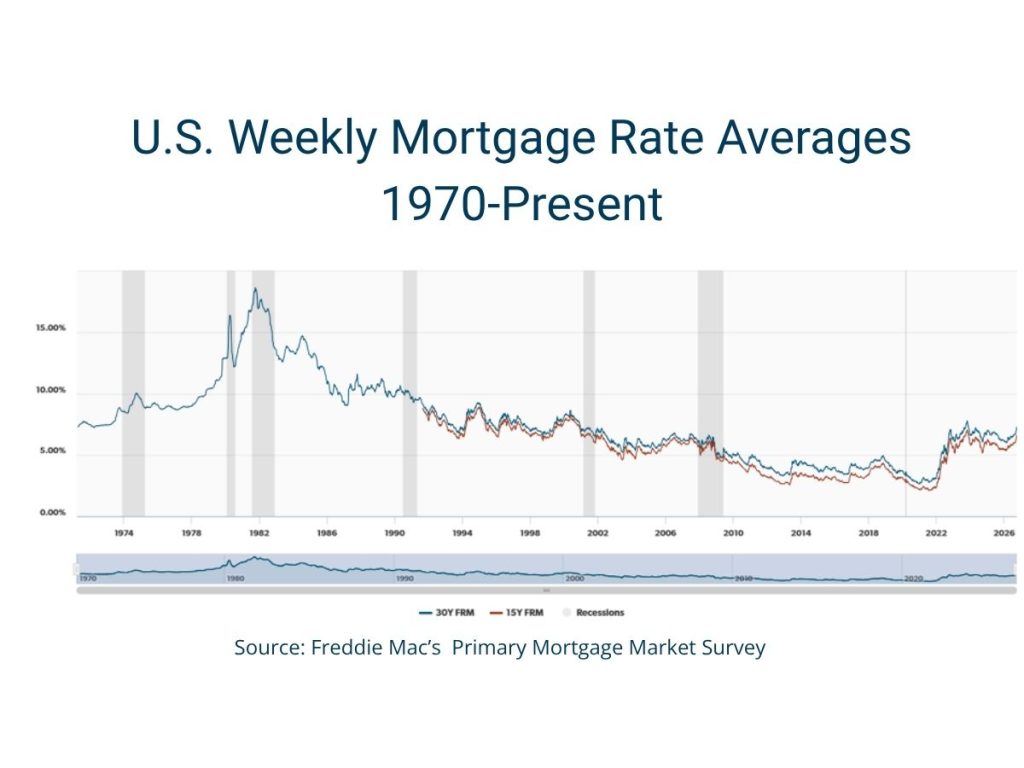
Freddie Mac started collecting data on the weekly average for 30-year conventional rates back in 1970. It took all the way to August 1993 for that average to dip below 7.0%. It didn’t dip below 6.0% until the end of 2002. Most of the 80s, the average was in the double digits. What’s consistent about the 50+ years of tracking average mortgage rates is the fact that changes in either direction happen gradually. Unless there is some drastic economic event that tips the scales, rates move slowly and incrementally. Rates typically move less than one full percentage point up or down over a 12-month timeframe. With the weekly 30-year average currently sitting at 7.28% as of October 1st, we are likely looking at more than 2 years of steady declines to get to that magical 5% target. And currently, rates are moving upward rather than down.
What’s the problem with waiting three years to buy a home?
If you are genuinely capable of purchasing a home now, you have an advantage. The first part is simple, you don’t have to put off your dreams of a backyard or space for a dog or a family. That benefit may not be measurable in currency, but it certainly impacts your happiness and quality of life.
Second, unless you are currently living rent-free, the money you pay over those three years towards renting will be gone. If you were paying that same amount toward a monthly mortgage, you would be building equity in your home. Every year the average homeowner builds about one month’s rent in equity. Homeowners are also eligible for various tax breaks that make owning more affordable.
And finally, the price of a home today will likely be higher in 3 years than it is today. There is a clear history of home values increasing over time. Additionally, if interest rates do drop to 5% in a few years, competition will certainly heat up. If everyone jumps into the homebuying market at the same time, your options would be much more limited and the rise in demand would push up sale prices. The double whammy of appreciated value plus competition would make that same home you could have purchased today significantly more expensive to purchase down the road.
Even if you buy today, you can still take advantage of a future rate drop
If rates actually do drop back down to 5% in a few years, you have the option to refinance. A rate decrease that significant would likely make a lot of financial sense. Refinancing does come with closing costs, but those would likely be recouped very quickly in the amount you end up saving with the lower interest rate. To confirm that, you would want to look for your breakeven point. This is how many months of payments at the lower rate it would take for the savings in interest to cover the out of pocket closing costs. Afte the breakeven point, you are genuinely saving money by refinancing. Your loan officer would work with you to determine this number. If that number is longer than you plan to stay in the home, refinancing wouldn’t be a smart option for you.
Should everyone bite the bullet and go buy a home today?
Well, no, not everyone is in a good position to do so. Funds for the down payment and closing costs and a stable income that is reliable enough to support the monthly mortgage payment are essential. And if you’re not planning on staying in the same area for more than a few years, you might not live there long enough to warrant purchasing. But if you do have the funds available to buy, are in a stable work situation and don’t plan on moving for at least a few years, buying now could very well be a smarter choice. This is especially true when you know what the cost of buying is today, but the future cost is unknown. Rates might drop. They might not.
If you’re curious what a monthly mortgage payment might look like for you, reach out to us to chat. We can help outline the standard up front and monthly expenses and help you identify if it fits within your personal budget. The bottom line is if you run the numbers and the monthly payment for a home at today’s rates is within your budget and homeownership is a goal of yours, buying now is definitely worth considering.